
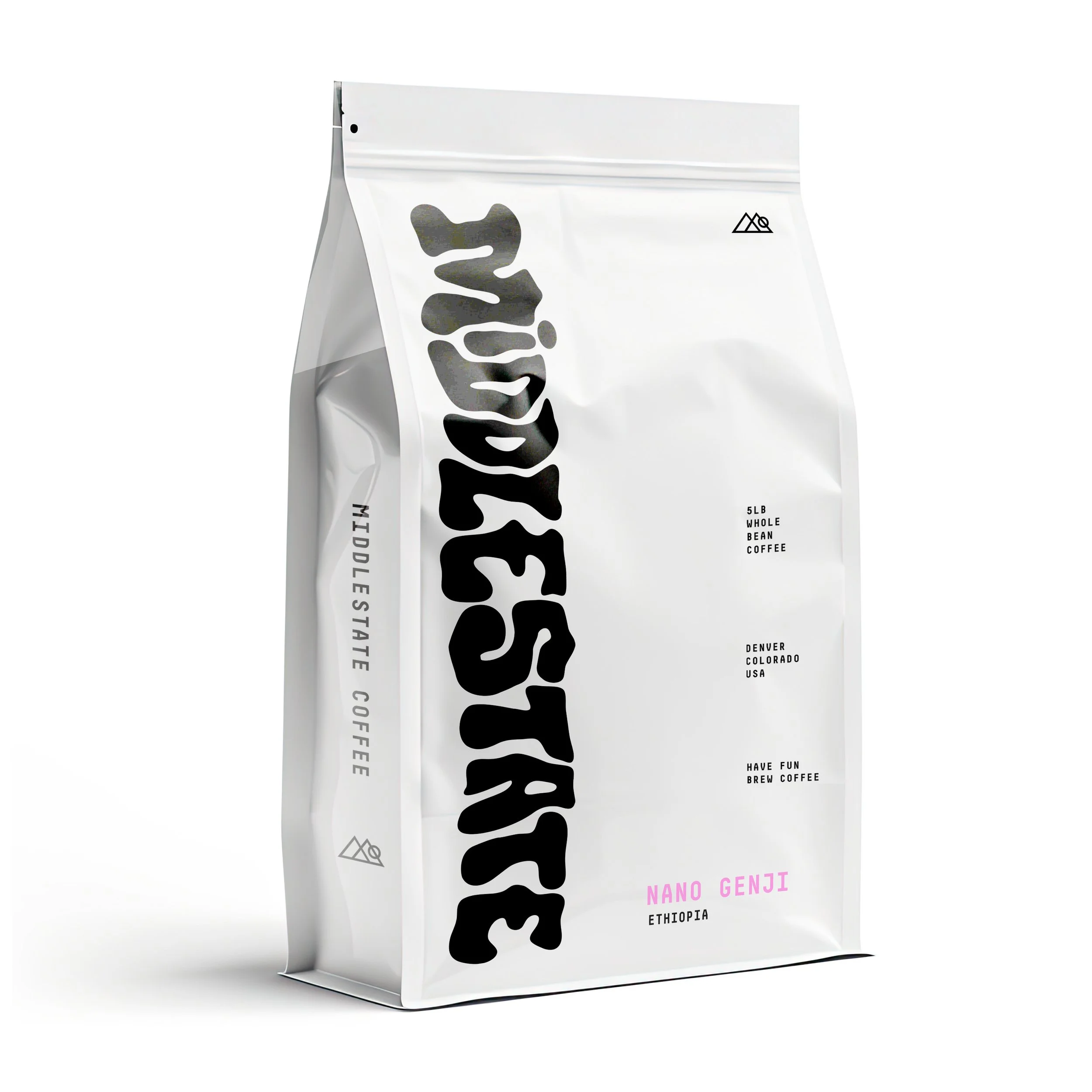
Nano Genji / ETHIOPIA - 5LB Bag
$13 per lb
Peach Candy, Crisp, Floral, Bergamot
Producer: Various Smallholders
Location: Oromia
Varietal: Landraces
Process: Washed
Elevation: 2000-2050 masl
FOB Cost: $11.17 kg
Our Cost: $13.92 kg
This is our 4th time purchasing this coffee from Red Fox Coffee Merchants. We lapsed it for a few years due to quality concerns, but gave it another shot this year, and we were pleasantly surprised with the improvements made to bring it back to where it was 4 years ago. Bursting with florals, subtle and crisp acidity, and vibrant candy like sweetness.
Back in 2009 when Red Fox co-founder and CEO Aleco first traveled to meet with Agaro cooperatives, their coffees were flowing into the marketplace undifferentiated and undervalued. Once USAID’s Technoserve project, which focused on improving African coffee farmers’ lives by helping them get better prices for their coffee, established these washing stations with brand-new processing equipment, Aleco saw the unique character of these coffees and invested in developing relationships with their producers, which have grown stronger to this day.
Processing is beyond meticulous in Agaro. After Penagos processing equipment mechanically removes most of the fruit and mucilage from the seeds, they soak overnight in fiberglass tanks, allowing any remaining sugars to be fully removed from their surface so that the coffees are perfectly clean by the time they hit the drying beds for the 8+ days they’ll need to dry. Like the rest of Ethiopia, Jimma is divided into several woredas (districts) and kebeles (communities) with washing stations throughout—each offering unique terroir. The Geera woreda is one of them, and within it lies the Genji Challa kebele, which houses both the Nano Genji and Nano Challah washing stations. In the Nano Genji washing station, the coffees are washed and mechanically depulped, then soaked overnight. After fermentation, coffee is dried for 6 to 8 hours a day over 6 to 8 days on raised beds, with frequent turning for even drying. The area of Genji Challa is characterized by high rainfall distributed across the whole growing season. The harvest season usually goes from mid-October to late January. The farms are located at soaring altitudes that range from 2000-2050 masl.
The community’s main source of income is coffee, which they grow on very small farms ranging from 0.1 to 2 hectares. Genji Challa’s producers intercrop using false banana trees and maize for shade, selecting based on the age of the coffee plant and its other needs. Their soil is a highly fertile sandy loam with good water retention and drainage. It’s self-sufficient with proper planting practices and doesn’t require fertilizer to produce spectacular quality. The farmers of Genji Challa belong to the Oromo people and speak Oromo. They maintain certain ancestral customs and have a quiet lifestyle built almost entirely around coffee farming. Many families here struggle with lack of electricity and drinking-water access. Children in the area usually don’t start going to school until age 9 because they have to travel long distances to get to the nearest school. Due to this education gap, the majority of young people in the area end up dedicating themselves to agriculture: growing potatoes, coffee, maize, or false banana trees on their parents' or neighbors’ farms.